
Understanding antique pianos : What you need to know
Before you buy : the reality of antique pianos
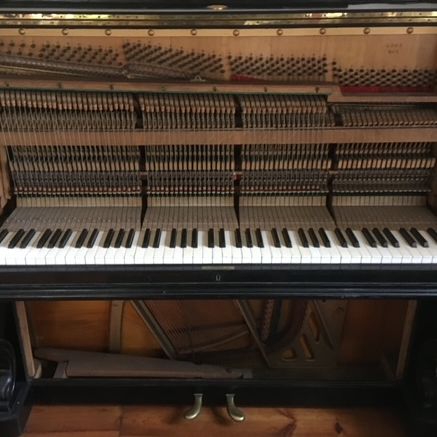
Before giving in to the temptation of a century-old antique piano at a low price, it is important to understand that it will likely require a complete restoration to become playable. At this stage, such an instrument is often little more than a bulky piece of furniture, with little to no musical value.
An antique piano in good condition has generally been maintained and restored several times throughout its life, which explains why its price is naturally higher.
The importance of pitch :
One must also consider the evolution of pitch. In France, instruments manufactured between 1859 and 1939 were tuned to a pitch of A = 435 Hz. After this period, the international standard was adopted, rising to 440 Hz, and even 442 Hz for orchestral use.
As a piano tuner & technician, I carry out major restoration work and complex maintenance directly at my workshop located in Montpon-Ménestérol 24700. For on-site services, I regularly intervene within a local radius around Montpon.
To optimize travel costs, I also organize scheduled group service tours in my three key sectors: around Pau and Oloron (Béarn 64), as well as around Bellême (Orne 61) and Le Mans (Sarthe 72).
Expert advice & recommendations
At first glance, a piano’s aesthetics can be seductive, but they do not reflect its functional condition. Before any purchase, it is essential to verify the action and the maintenance history of the instrument.
For an initial assessment, open the upper and lower panels to observe :
- Alignment : Check for even spacing and consistent alignment of all moving parts.
- Touch and sound : Ensure a uniform response across the keys and the absence of extraneous noises.
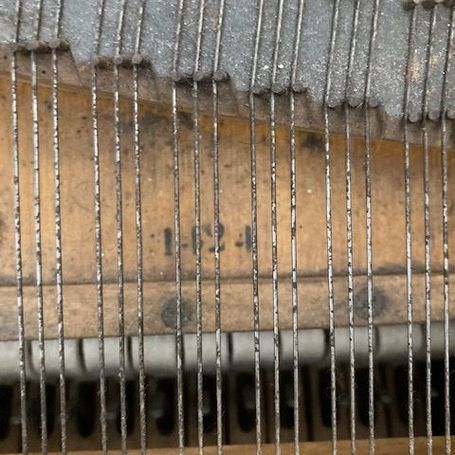
- Hammer felts : Look for felts in good condition, free from deep grooves or traces of pests (such as moths).
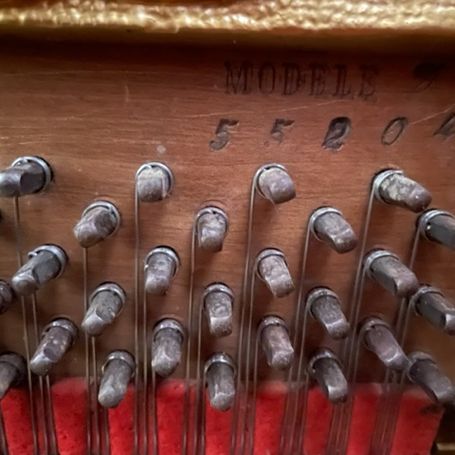
- Sound pinblock (sommier) : Ensure the pinblock is healthy, with no ovalized holes or cracks around the tuning pins.
The list goes on...
To avoid any unpleasant surprises, hiring a technician for a full professional assessment remains your best guarantee.